An under-insulated home is a structure with insufficient insulation R-value to prevent excessive heat loss, causing drafty rooms, high energy bills, and uneven heating throughout the year. This condition affects the building envelope—the physical barrier separating indoor and outdoor environments, including the attic, walls, basement, and crawl space.
Why Under-Insulation Matters for Home Comfort and Energy Efficiency
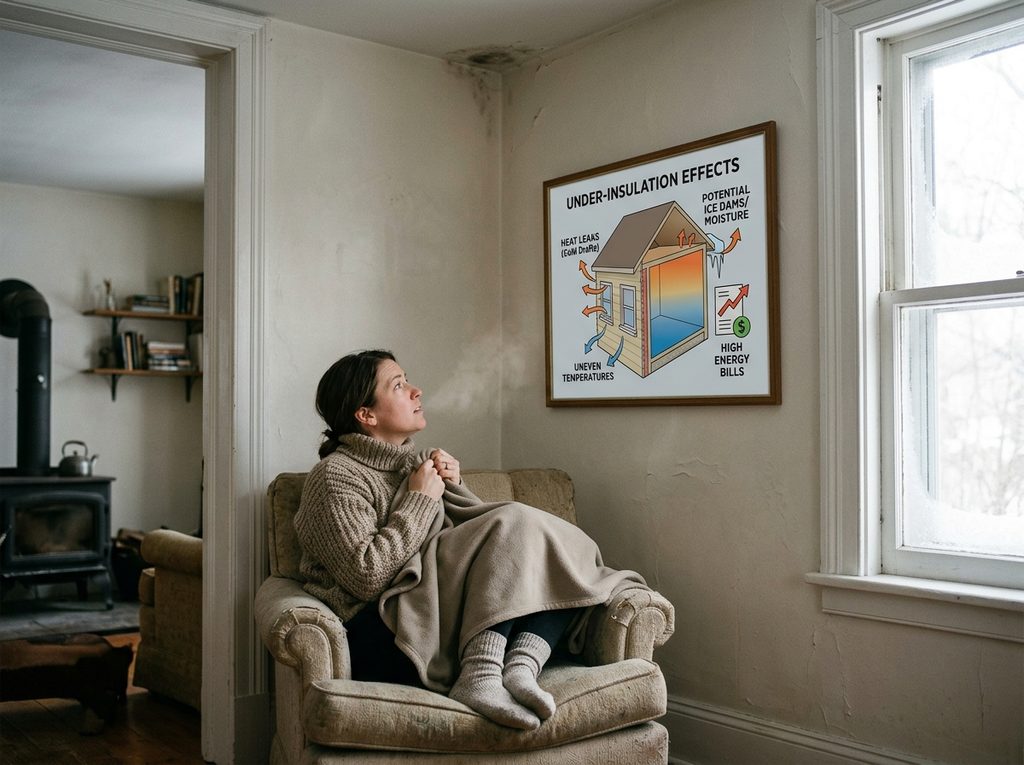
According to the Department of Energy (2024), heating and cooling account for nearly 50% of home energy use, and inadequate insulation is a leading cause of energy waste. Poor thermal performance leads to rising utility costs, temperature fluctuations, and long-term insulation deterioration that worsens over time. Recognizing signs of an under-insulated home early prevents costly repairs and improves year-round comfort.
Key Characteristics of an Under-Insulated Home
1. High Energy Bills and Seasonal Energy Loss
Unexplained spikes in heating or cooling costs often indicate insulation gaps. Seasonal energy loss becomes obvious when bills rise despite consistent thermostat settings.
2. Hot and Cold Spots Throughout the House
Uneven heating between rooms—especially upper floors versus basements—signals inconsistent insulation coverage across walls, attic, and floors.
3. Cold Walls and Drafty Rooms
Touching an exterior wall that feels noticeably colder than room temperature suggests wall insulation issues or thermal bridging, where heat escapes through structural framing.
4. Ice Dams on the Roof
Ice dams form when attic heat melts snow unevenly, refreezing at the roof edge. This is a classic under-insulated attic symptom tied to attic insulation problems.
5. Condensation on Windows and Frozen Pipes
Condensation on windows indicates excess humidity escaping through poorly insulated walls. In severe cases, frozen pipes in exterior walls or crawl spaces point to critical insulation gaps.
How to Tell If Your House Is Under-Insulated: A Step-by-Step Diagnostic
Homeowners asking “how to tell if your house is under insulated” can follow this checklist:
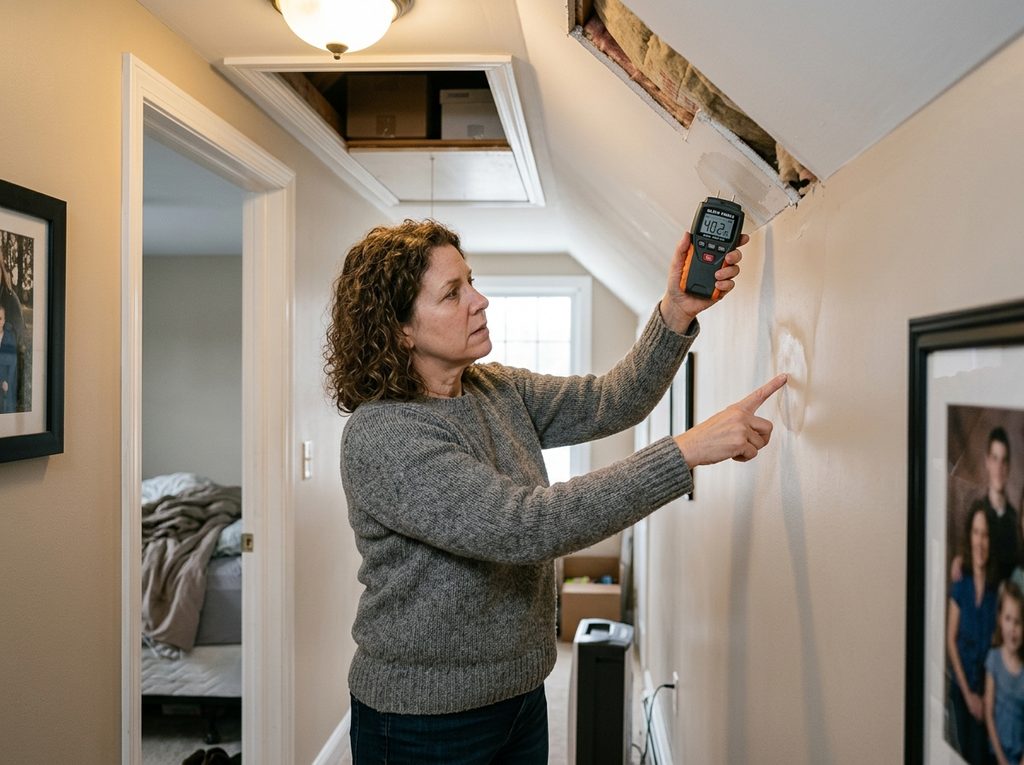
- Visual attic inspection: Check if attic insulation sits below joists—a common sign your attic insulation is failing.
- Touch test: Feel walls, ceilings, and floors for cold walls or drafts near outlets and window frames.
- Utility bill comparison: Compare current bills to past years, adjusting for weather, to spot rising utility costs.
- Blower door test: A certified technician uses this tool to measure air leaks and pressurize the home, revealing hidden insulation gaps.
- Thermal imaging camera scan: This device visually maps hot and cold spots, exposing thermal bridging and missing insulation in walls or ceilings.
- Professional energy audit: A comprehensive energy audit combines blower door testing, thermal imaging, and ductwork inspection to assess whole-home performance.
- Hire an insulation contractor or home inspector: Professionals verify R-value levels against Department of Energy recommendations for your climate zone.
Common Misconceptions About Home Insulation Problems
Myth: New Homes Never Have Insulation Issues
Reality: Even homes built after 2010 can have insulation gaps from poor installation, settling cellulose insulation, or compressed fiberglass insulation.
Myth: Thicker Insulation Always Means Better Performance
Reality: Insulation performance depends on proper installation, vapor barrier placement, and eliminating air leaks—not thickness alone. Spray foam insulation, for example, achieves high R-value per inch compared to fiberglass.
Myth: Insulation Lasts Forever
Reality: Insulation deterioration occurs from moisture, pests, and age. Symptoms of bad insulation in older homes often stem from insulation that has settled or degraded over 20+ years.
Under-Insulated Home vs. Poorly Sealed Home: Key Differences
An under-insulated home lacks sufficient insulation material or R-value, while a poorly sealed home has air leaks around windows, doors, and penetrations despite adequate insulation. Unlike sealing issues, which weatherstripping alone can fix, insulation problems require adding or replacing insulation material. Many homes suffer from both conditions simultaneously, making a combined energy audit and blower door test essential for accurate diagnosis.
Practical Applications: How to Identify and Fix Insulation Issues by Area
Attic Insulation Signs
Check for uneven insulation depth, compressed fiberglass insulation, or visible ceiling joists—clear under-insulated attic symptoms requiring immediate attention.
Wall Insulation Issues
Cold walls, staining, or sound transfer between rooms suggest wall insulation issues. Thermal imaging cameras can confirm gaps without demolition.
Crawl Space and Basement Insulation Damage
Signs of insulation damage in crawl space include sagging batts, moisture stains, or pest nesting. Basements often lack proper vapor barrier installation, leading to condensation and heat loss.
Ductwork and HVAC System Efficiency
Uninsulated ductwork running through unconditioned spaces like attics or crawl spaces wastes conditioned air before it reaches living areas, straining the HVAC system.
Insulation Types Comparison: Choosing the Right Upgrade
| Insulation Type | Typical R-Value per Inch | Best Use Case |
|---|---|---|
| Fiberglass insulation | 2.2–2.7 | Walls, attics |
| Cellulose insulation | 3.2–3.8 | Attics, retrofits |
| Spray foam insulation | 3.5–6.5 | Crawl spaces, rim joists, air sealing |
When to Replace Old Home Insulation
The Department of Energy recommends reassessing insulation every 15–20 years or immediately after detecting moisture damage, pest infestation, or visible insulation gaps. An insulation contractor can perform an insulation assessment to determine whether insulation replacement or supplemental insulation upgrade is appropriate.
Frequently Asked Questions
How do I know if my walls need insulation? Cold-to-touch walls, higher bills, and thermal camera readings showing temperature differences over 10°F confirm the need.
What causes high energy bills due to insulation? Heat loss through uninsulated or under-insulated surfaces forces HVAC systems to run longer, increasing energy waste and costs.
How to spot drafts from poor insulation? Use a lit candle or incense stick near outlets, baseboards, and window frames; flickering indicates air leaks.