
Yes, attic insulation is worth it before winter if your attic’s R-value falls below 38 and your home is more than 15 years old. According to the Department of Energy (2024), homes lose 25-30% of heating energy through inadequate attic insulation and attic air leaks. Adding insulation before cold weather arrives typically pays back within 2-5 years through reduced heating bills.
What You Get: Attic Insulation Inclusions vs Extras
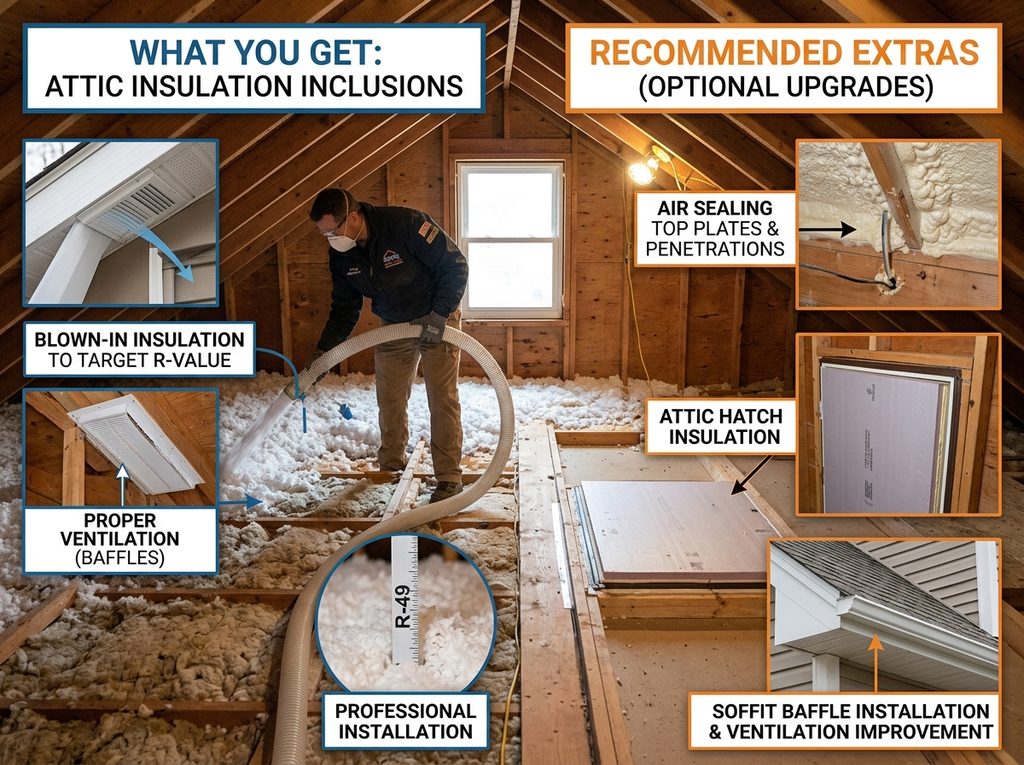
A standard attic insulation upgrade includes core materials and labor, but several add-ons cost extra depending on your attic’s condition.
Standard Inclusions
- Insulation material installation — fiberglass insulation batts, blown-in insulation, or cellulose insulation to reach target R-value
- Basic attic air sealing around visible attic air leaks and penetrations
- Insulation thickness measurement to confirm compliance with local building codes
Common Extras (Cost Additional)
- Spray foam insulation for roof deck applications ($1.50-$3.50/sq ft extra)
- Vapor barrier installation in humid or cold climates
- Attic ventilation upgrades (soffit and ridge vents)
- Insulation removal of old, damaged, or mold-affected material
- Full Home Energy Audit with infrared inspection
Attic Insulation Cost Breakdown
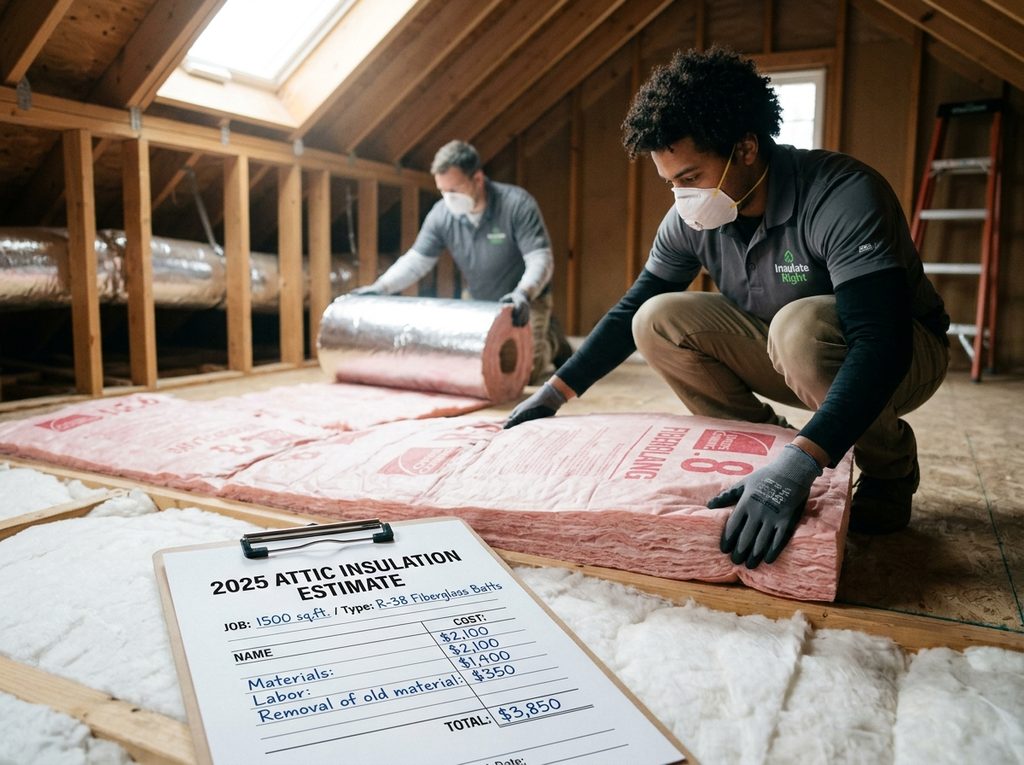
Attic insulation cost varies by material type, attic size, and whether you hire an insulation contractor or attempt DIY insulation installation.
| Insulation Material Type | Cost Per Sq Ft | R-Value Per Inch |
|---|---|---|
| Fiberglass insulation batts | $1.00 – $2.10 | R-2.9 to R-3.8 |
| Blown-in insulation (fiberglass) | $1.50 – $2.75 | R-2.5 |
| Cellulose insulation | $1.50 – $3.00 | R-3.2 to R-3.8 |
| Spray foam insulation | $3.50 – $7.00 | R-6.0 to R-6.5 |
For an average 1,000 sq ft attic, total insulation upgrade cost ranges from $1,500 (DIY fiberglass) to $7,000 (professional spray foam). A Home Energy Audit typically adds $250-$400 but often qualifies for utility rebates through Energy Star programs (Energy Star, 2024).
Insulation R-Value Chart for Winter Climates
The Department of Energy recommends these attic insulation R-value requirements by climate zone:
- Zone 1-2 (warm): R-30 to R-49
- Zone 3-4 (mixed): R-38 to R-60
- Zone 5-7 (cold): R-49 to R-60
- Zone 8 (extreme cold): R-60+
Expected Benefits & ROI Analysis
Attic insulation benefits extend beyond comfort into measurable financial and structural protection.
Winter Energy Savings
Homeowners see 10-20% reductions in heating costs after upgrading insulation, according to Energy Star (2024) data. This heat retention directly reduces strain on the HVAC system, extending equipment lifespan.
Heat Loss and Ice Dam Prevention
Poor insulation causes uneven roof heating, which melts snow that refreezes at the eaves. This creates ice dams that damage roofing and gutters. Proper attic insulation prevents ice dams by keeping attic temperatures consistent with outdoor conditions—one of the clearest examples of how insulation upgrade benefits translate into avoided repair costs.
Payback Period
Most insulation upgrades reach ROI within 2-5 years based on average heating costs reduction of $200-$600 annually for a 2,000 sq ft home (DOE, 2024). Homes in cold climates see faster payback due to higher heating demand.
Who Should / Shouldn’t Invest in Attic Insulation Before Winter
You Should Invest If:
- Your attic insulation is more than 15 years old or visibly compressed
- You notice signs you need more attic insulation before winter, such as ice dams, cold rooms, or high heating bills
- Your current R-value falls below regional recommendations
- You’re planning broader energy efficient home improvements this season
You Shouldn’t Invest If:
- Your home already meets Energy Star insulation R-value requirements
- You recently completed a Home Energy Audit showing adequate attic performance
- Budget constraints require prioritizing HVAC system repairs first
Alternatives to Consider
Before committing to a full attic insulation upgrade, weigh these options:
DIY Attic Insulation Before Winter Guide
DIY insulation installation using fiberglass insulation batts can cut labor costs by 40-60%, but lacks the precision of professional attic air sealing. This works best for simple, accessible attics without complex rooflines.
Professional Insulation Service
Hiring a licensed insulation contractor or insulation installer ensures proper vapor barrier placement, attic ventilation balance, and building code compliance. Searching “insulation contractor near me” helps homeowners compare local quotes before the best time to insulate attic before winter passes.
Partial Weatherization
If budget is limited, targeted weatherization—sealing attic air leaks without full re-insulation—offers modest winter energy savings at lower cost. For homeowners planning a complete attic insulation before winter project, combining air sealing with insulation upgrades delivers the highest efficiency gains.
Final Verdict
Attic insulation is worth the investment for most homes built before 2010 or those without recent upgrades. Cold weather preparation should begin in early fall, since the best time to insulate attic before winter is before the first hard frost—typically September through November in most U.S. climates.
Attic Insulation Checklist Before Cold Weather Arrives
- Schedule a Home Energy Audit to assess current R-value
- Inspect for attic air leaks around vents, pipes, and wiring
- Compare insulation material types for your climate zone
- Get quotes from 2-3 insulation contractors
- Confirm compliance with local building codes and R-value requirements
- Verify attic ventilation remains balanced after installation
For homeowners asking “should I add attic insulation before winter,” the data supports a clear yes when current insulation underperforms—delivering lower heating bills, ice dam prevention, and long-term home weatherproofing value.