
Proper home insulation can reduce energy bills by 15% to 50% annually in Indiana, depending on current insulation levels and upgrade scope. This tutorial provides a systematic method to calculate potential savings, assess return on investment, and maximize energy efficiency improvements for Indiana homeowners. Skill Level: Beginner. Time Required: 2-4 hours for assessment and calculations.
Before You Begin: Prerequisites for Calculating Insulation Savings

Required Materials and Information:
- 12 months of utility bills from Duke Energy Indiana, Northern Indiana Public Service Company (NIPSCO), or Indiana Michigan Power
- Current insulation measurements (attic insulation, wall insulation, basement insulation depths)
- Home square footage and layout documentation
- Understanding of R-value and thermal resistance concepts
- Calculator or spreadsheet software for energy savings calculation
- Indiana climate zone identification (Zone 5A for most of state)
- Access to home energy audit recommendations (if available)
Helpful Optional Tools:
- Infrared camera or thermal imaging inspection results
- Blower door test results showing air infiltration rates
- Energy audit Indiana professional report
Step 1: Assess Your Current Insulation Levels and Thermal Performance
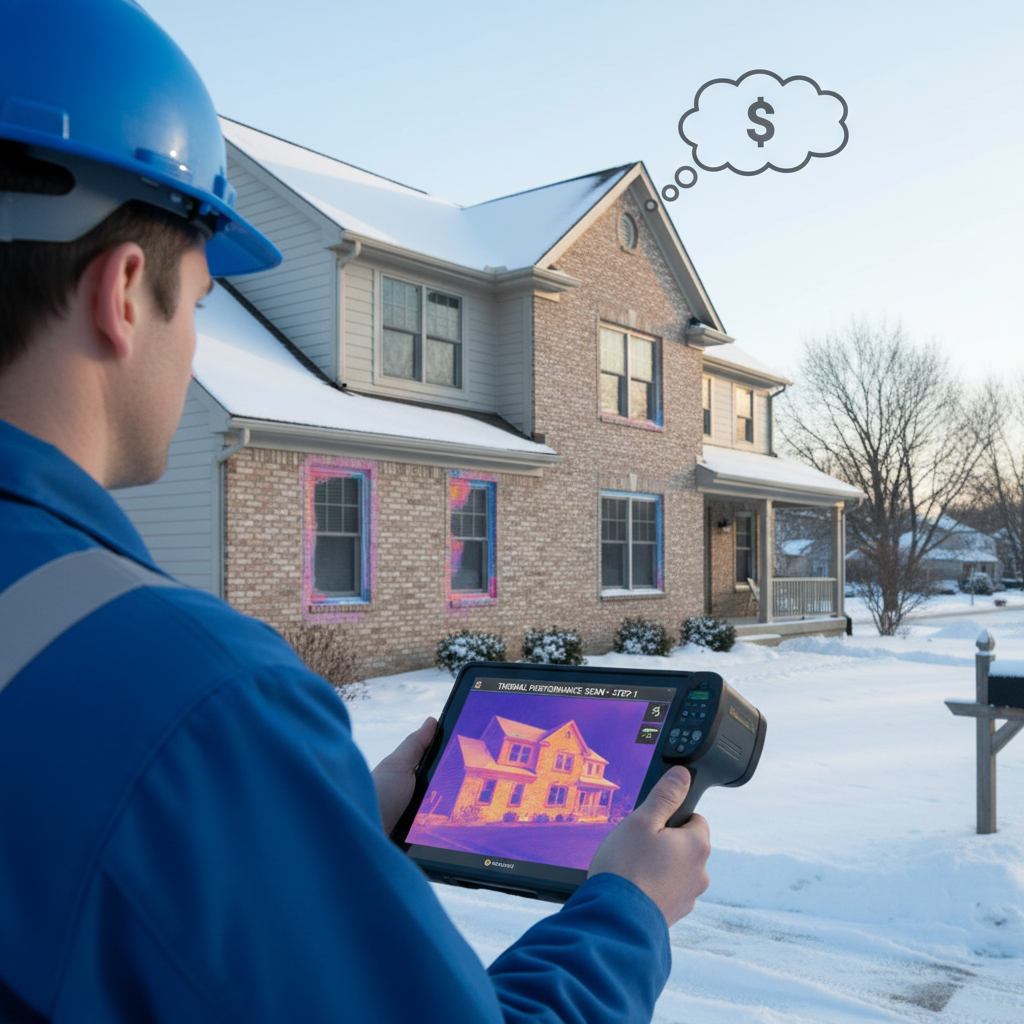
According to the Department of Energy, understanding existing insulation determines accurate savings potential. Begin by measuring current insulation depths in key areas of your thermal envelope.
Measure Existing Insulation R-Values
- Access your attic and measure insulation depth in inches
- Calculate existing R-value: fiberglass insulation provides R-2.9 to R-3.8 per inch, cellulose insulation offers R-3.1 to R-3.7 per inch
- Check wall cavities (requires drilling small inspection holes or using thermal imaging)
- Inspect crawl space and basement insulation coverage
- Document air sealing quality around windows, doors, and penetrations
For example, 6 inches of fiberglass insulation in your attic provides approximately R-19, while Indiana building codes recommend R-49 for attic insulation in climate zone 5A.
Identify Heat Loss Prevention Gaps
The EPA recommends examining these common thermal performance issues:
- Missing or compressed insulation in attic corners and eaves
- Uninsulated rim joists and band joists in basements
- Inadequate crawl space insulation or encapsulation
- Air barrier system failures around HVAC system penetrations
- Missing vapor barrier in basement or crawl space areas
Step 2: Calculate Current Energy Usage and Establish Your Baseline
Accurate utility cost analysis requires understanding your residential energy use patterns. This baseline enables precise calculation of insulation investment returns.
Compile Annual Energy Consumption Data
- Gather 12 consecutive months of utility bills
- Record monthly kilowatt-hour (kWh) usage for electricity
- Document therms or cubic feet for natural gas consumption
- Calculate total annual heating costs (November through March typically)
- Determine summer cooling costs (June through September)
- Sum total annual energy expenses for heating and air conditioning
For Indianapolis residents, average monthly energy expenses range from $90 to $180 depending on home size and insulation quality, according to Duke Energy Indiana data from 2024.
Identify Energy Waste Prevention Opportunities
| Season | Primary Energy Use | Typical Loss Without Proper Insulation |
|---|---|---|
| Winter (Nov-Mar) | Furnace or heat pump heating | 25-35% heat loss through attic, 20-25% through walls |
| Summer (Jun-Sep) | Central air conditioning | 15-25% cooling load increase from heat gain |
| Spring/Fall | Moderate HVAC use | 10-20% temperature regulation inefficiency |
Step 3: Determine Optimal R-Value Requirements for Indiana Climate
The International Energy Conservation Code establishes minimum insulation standards, but exceeding these creates greater energy bill reduction potential.
Recommended R-Value by Home Area
According to Energy Star and Indiana building codes for climate zone 5A:
- Attic insulation: R-49 to R-60 (16-20 inches of blown-in insulation)
- Wall insulation: R-20 to R-21 for 2×6 walls, R-13 to R-15 for 2×4 walls
- Basement insulation: R-15 to R-19 for walls, R-10 for floors
- Crawl space: R-19 to R-25 for walls, R-13 to R-19 for floors
- Rim joists: R-15 minimum (spray foam insulation recommended)
Climate-Appropriate Insulation Material Selection
Building science principles for Fort Wayne, South Bend, Evansville, and Indianapolis indicate these insulation material comparison factors:
- Fiberglass insulation: $0.40-$0.70 per square foot, R-3.2 per inch average
- Cellulose insulation: $0.60-$1.00 per square foot, better air infiltration reduction
- Spray foam insulation: $1.50-$3.50 per square foot, superior air barrier system
- Rigid foam insulation: $0.80-$1.50 per square foot, excellent moisture control
- Mineral wool: $0.90-$1.40 per square foot, fire-resistant with consistent R-value
Step 4: Estimate Total Insulation Upgrade Costs
Professional installation versus DIY insulation savings potential varies significantly. Calculate both scenarios for accurate ROI assessment.
Professional Installation Pricing Indiana
According to insulation contractors in Indianapolis and Fort Wayne (2024-2025 rates):
- Attic insulation cost and savings: $1.50-$3.00 per square foot including labor
- Wall insulation benefits: $2.50-$5.00 per square foot for retrofit installation
- Basement insulation cost: $3.00-$6.00 per square foot for spray foam application
- Crawl space encapsulation: $5,000-$15,000 complete system with vapor barrier installation
A typical 1,500 square foot home in Indiana requires $2,500-$5,000 for comprehensive attic insulation upgrade to R-49.
Cost-Effective Upgrades and Material Expenses
DIY insulation savings potential reduces labor costs by 40-60%:
- Blown-in insulation cost per square foot: $0.50-$1.20 (materials only)
- Batt insulation pricing: $0.30-$0.80 per square foot
- Spray foam cost per square foot: $1.00-$2.50 (DIY kits available)
- Air sealing materials: $150-$400 for whole-house weatherization
Step 5: Calculate Projected Energy Savings by Area
The Department of Energy provides formulas for heating cost reduction and cooling cost savings based on insulation improvements.
Percentage Reduction in Energy Bills Calculation Method
Use this energy conservation measures formula for residential insulation benefits:
- Determine BTU heat loss through current insulation: BTU = (Area × ΔT × 24) ÷ Current R-value
- Calculate BTU heat loss with upgraded insulation using new R-value
- Subtract new BTU from current BTU to find reduction
- Divide reduction by current BTU, multiply by 100 for percentage
- Apply percentage to annual heating costs for dollar savings
Zone-Specific Insulation Needs and Savings Potential
| Upgrade Area | Average Savings Percentage | Annual Dollar Savings (1,500 sq ft home) |
|---|---|---|
| Attic R-19 to R-49 | 20-30% | $300-$540 |
| Wall cavity insulation retrofit | 15-25% | $225-$450 |
| Basement walls R-0 to R-15 | 10-15% | $150-$270 |
| Air sealing and draft reduction | 10-20% | $150-$360 |
| Whole-house insulation optimization | 40-50% | $600-$900 |
According to NIPSCO utility data, homes in South Bend and Fort Wayne see higher winter heating costs, making insulation upgrades particularly cost-effective with annual savings from whole house insulation reaching $900-$1,200.
Step 6: Determine ROI and Calculate Insulation Payback Period
Understanding how long does insulation take to pay for itself guides prioritization of home energy efficiency improvements.
Simple Payback Period Formula
- Total Investment Cost ÷ Annual Energy Savings = Payback Period in Years
- Example: $3,500 attic upgrade ÷ $420 annual savings = 8.3 years
- Subtract available rebates from total investment for accurate calculation
- Consider 30-year lifespan of quality insulation installation
Return on Investment for Home Insulation Analysis
Average ROI on insulation upgrade Indiana calculations (2025):
- Attic insulation savings: 5-10 year payback, 200-400% lifetime ROI
- Air sealing savings: 3-6 year payback, 350-600% lifetime ROI
- Wall insulation: 8-15 year payback, 150-300% lifetime ROI
- Basement/crawl space: 10-20 year payback, 100-250% lifetime ROI
- Spray foam ROI: 8-12 year payback with superior home comfort improvement
Energy-efficient homes in Indianapolis typically increase resale value by $15-$25 per square foot according to Energy Star home certifications.
Step 7: Identify and Apply for Energy Rebates and Tax Credits
Utility rebate programs and federal incentives significantly reduce net insulation installation cost and accelerate payback time.
Duke Energy Indiana Insulation Rebates
Duke Energy Indiana offers these utility rebates for insulation in Indiana (2024-2025):
- Attic insulation: Up to $300 rebate for R-value upgrades
- Air sealing: $50-$150 for professional sealing services
- Home energy assessment: Free or $50 with instant rebate application
NIPSCO Weatherization Programs and Incentives
Northern Indiana Public Service Company provides:
- Residential energy efficiency rebates: 10-20% of installation costs
- Income-qualified programs through Weatherization Assistance Program Indiana eligibility
- Bonus incentives for whole-house energy performance assessment completion
Indiana Michigan Power Energy Efficiency Incentives
- Insulation rebates up to $400 for comprehensive upgrades
- Financing options for energy conservation measures
- Free blower door test cost coverage with participation
Federal Tax Credits for Insulation
Indiana home insulation tax credits 2024 under the Inflation Reduction Act:
- 30% tax credit on insulation materials and installation
- $1,200 annual cap for energy efficiency improvements
- Valid through December 31, 2032
- Requires Energy Star certification for eligible products
Troubleshooting: Common Calculation and Assessment Issues
If your calculated savings seem too low: Verify you’re comparing to optimal R-value recommendations, not just minimum codes. Check for air infiltration issues reducing insulation effectiveness.
If payback period exceeds 15 years: Prioritize attic and air sealing first, which offer faster ROI. Consider whether current utility rates accurately reflect future energy consumption patterns.
If existing insulation depths are difficult to measure: Schedule thermal imaging inspection cost Indiana professionals (typically $200-$400) to identify heat transfer reduction opportunities without invasive testing.
If rebate eligibility is unclear: Contact your utility provider directly. Duke Energy, NIPSCO, and Indiana Michigan Power maintain customer service lines specifically for energy efficiency upgrades.
If DIY installation seems overwhelming: Request quotes from finding insulation contractors in Indianapolis, Fort Wayne insulation installation companies, Evansville home insulation services, and South Bend energy efficiency contractors. Compare at least three bids.
Next Steps: Maximizing Your Energy Efficiency Investment
After calculating potential savings and ROI:
- Schedule professional home energy audit through certified contractors
- Apply for utility rebate programs before beginning installation
- Prioritize upgrades by fastest payback period
- Combine air barrier system improvements with insulation installation
- Document baseline energy usage for measuring actual performance improvement
- Monitor monthly energy bill reduction over first 12 months post-installation
For professional assessment and installation services that maximize energy savings potential, Homeward Insulation provides comprehensive evaluation and implementation of building envelope efficiency improvements throughout Indiana.
Implementing proper home weatherization delivers measurable utility bill reduction within the first heating season, with cumulative savings reaching thousands of dollars over the insulation’s 30-year lifespan. According to building science principles and Department of Energy research, Indiana homeowners investing in thermal performance optimization achieve 15-50% reduction in annual energy expenses while simultaneously improving home comfort solutions and increasing property values.