
R-value insulation measures a material’s thermal resistance, or its ability to resist heat flow, with higher values indicating better insulating performance. For Indiana attics, the Department of Energy (DOE) recommends R-49 to R-60 insulation to achieve optimal heating and cooling efficiency in this climate zone.
Why R-Value Matters for Indiana Homeowners
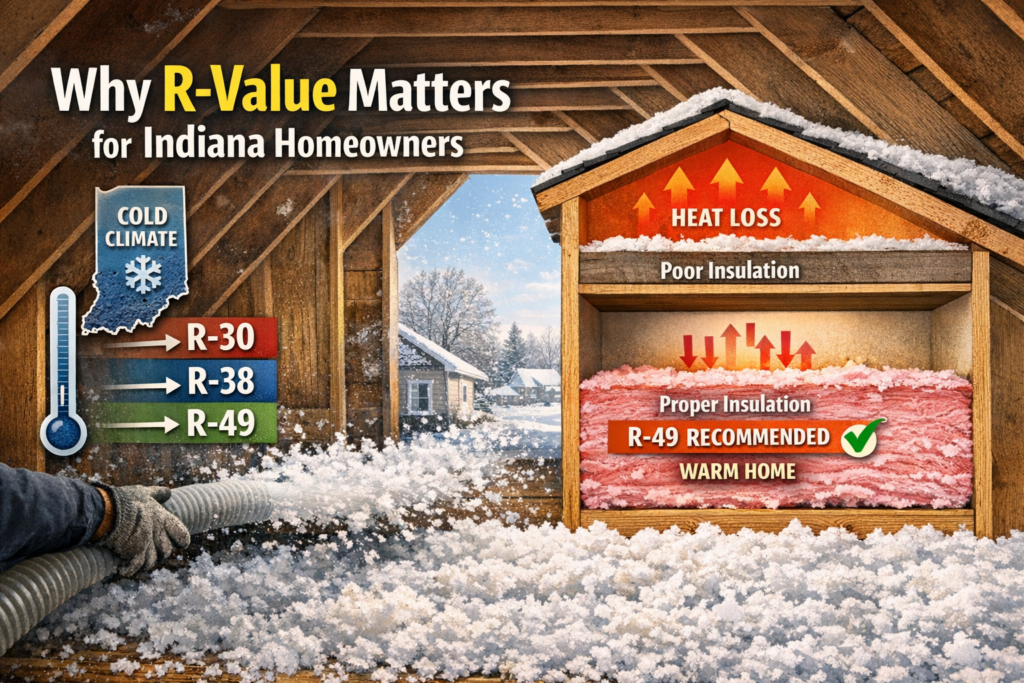
Indiana’s classification as Climate Zone 5 by the International Energy Conservation Code (IECC) requires substantial attic thermal resistance to combat extreme seasonal temperature swings. According to the DOE (as of 2025), proper attic insulation reduces heating costs by 15-20% and cooling costs by 10-15% annually. The thermal envelope’s performance directly impacts HVAC system efficiency, temperature regulation throughout Indianapolis, Fort Wayne, Evansville, South Bend, and Carmel homes.
The recommended insulation values for Indiana attics address both winter weather protection against heat loss prevention and summer heat mitigation for cooling load reduction. The Indiana Building Commission enforces these energy conservation standards through building code requirements that mandate minimum insulation levels for all residential construction and attic upgrade projects.
Key Characteristics of Indiana Attic Insulation Requirements
Recommended R-Value Ranges
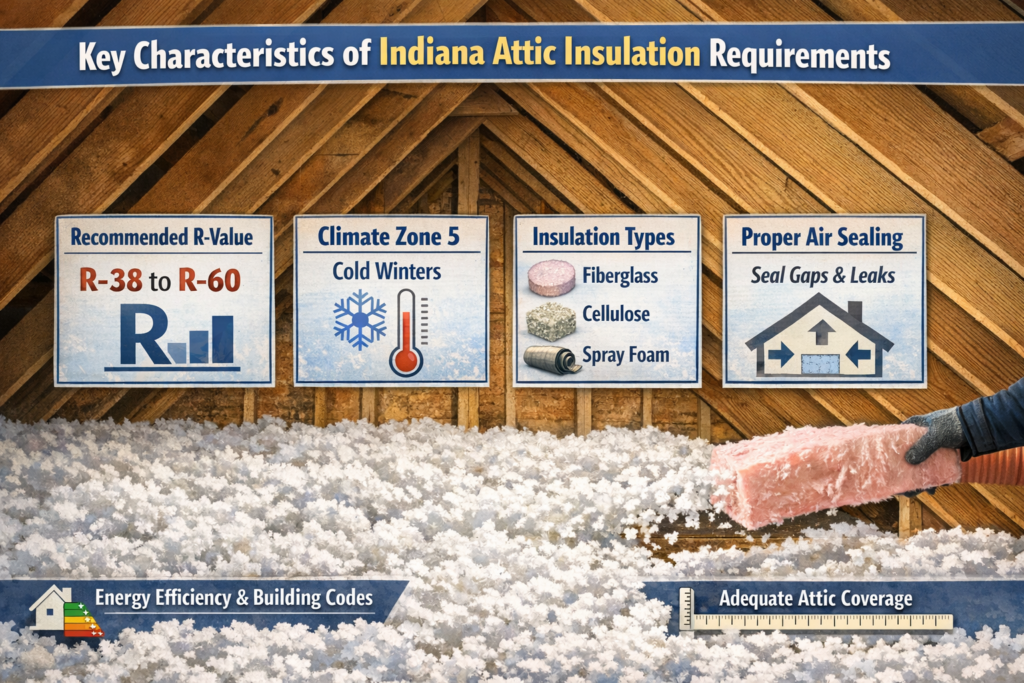
The optimal R-value for Indiana attics ranges from R-49 to R-60, depending on building thermal performance goals and energy audit recommendations. Energy Star specifications align with DOE standards, establishing R-49 as the minimum threshold for cold climate insulation effectiveness. Unfinished attic spaces require R-49 on the attic floor, while cathedral ceiling applications demand R-38 minimum due to space constraints.
Insulation Depth Requirements
Achieving proper thermal resistance requires specific insulation thickness based on material selection. Fiberglass insulation requires 14-18 inches for R-49, cellulose insulation needs 13-16 inches, and spray foam insulation achieves the same thermal resistance rating with 12-15 inches. The insulation depth chart varies by material density and R-value per inch specifications.
Building Code Standards Compliance
Indiana building code requirements mandate compliance with IECC standards for both new home construction and retrofit projects. The Indiana Building Commission requires documentation of insulation specification, coverage requirements, and installation best practices during attic insulation inspection procedures. Building envelope sealing must accompany insulation installation to prevent thermal bridging and maximize energy performance.
How Thermal Resistance Works in Attic Applications
Understanding heat transfer reduction mechanics clarifies why recommended attic insulation levels matter for home energy performance. The process involves three key steps:
- Conduction Prevention: Insulation materials trap air pockets that slow heat movement through the attic floor or roof deck, creating a thermal barrier between conditioned living space and unconditioned attic space.
- Convection Control: Proper air sealing techniques combined with adequate insulation depth prevent air currents from bypassing the thermal protection layer, eliminating draft elimination issues.
- Radiation Reduction: Some insulation materials incorporate radiant barrier technology that reflects radiant heat, particularly beneficial for summer cooling in Indiana’s hot season.
Insulation Material Types and Performance
Blown-In Insulation Options
Blown insulation includes loose-fill cellulose and fiberglass materials installed using professional equipment. Cellulose fiber achieves R-3.5 to R-3.8 per inch, requiring approximately 14 inches for R-49. Fiberglass batts in blown form provide R-2.5 to R-3.0 per inch, necessitating 16-18 inches for equivalent thermal resistance.
Spray Foam Application
Spray foam insulation delivers R-6.0 to R-7.0 per inch for closed-cell formulations, making it the most space-efficient option for finished attic space or attic conversion projects. Open-cell spray foam provides R-3.5 to R-4.0 per inch while offering superior air sealing advantages. According to building science research (2024), spray foam application eliminates 99% of air infiltration when properly installed.
Batt Insulation Rolls
Fiberglass batts represent the most economical DIY attic insulation solution, with R-3.0 to R-3.5 per inch performance. Batt insulation installation requires careful attention to proper insulation techniques, avoiding compression that reduces effectiveness. For more guidance on attic R-value Indiana specifications and professional installation services, consult certified insulation contractors Indiana.
Common Misconceptions About Attic Insulation
Myth: More Insulation Always Equals Better Performance
Reality: Beyond R-60, diminishing returns occur for insulation cost-benefit ratios in Indiana homes. The DOE recommends R-49 to R-60 as optimal based on cost to insulate attic calculations and seasonal energy savings projections.
Myth: Insulation Alone Solves Energy Problems
Reality: Air sealing before insulating attic Indiana projects proves essential for maximum effectiveness. According to home energy audit data (2024), unsealed attics lose 30-40% of insulation effectiveness through air leakage, regardless of R-value.
Myth: All Insulation Materials Perform Equally
Reality: Insulation material comparison reveals significant differences in thermal bridging prevention, moisture control, and installation process complexity. Spray foam vs blown-in insulation Indiana attic decisions impact long-term energy loss prevention and comfort improvement outcomes.
R-Value vs. Thermal Bridging
While R-value measures insulation material effectiveness, thermal bridging through structural elements reduces overall thermal envelope performance. Unlike continuous insulation coverage, wood framing creates heat transfer pathways that compromise theoretical R-value. Proper insulation techniques address this through comprehensive coverage requirements and attention to knee walls, attic baffles, and rafter vents integration.
Practical Applications and Installation Considerations
Professional Installation Benefits
Insulation contractors Indiana certified through building performance standards ensure proper ventilation balance, moisture barrier installation, and condensation prevention. Professional installers address soffit vents and ridge vents coordination to maintain attic ventilation requirements while achieving target R-values. Labor costs typically range from $1.50-$3.00 per square foot for blown-in insulation.
DIY Installation Process
Homeowners can install batt insulation following manufacturer specifications, but must understand proper attic ventilation with insulation Indiana requirements. Common attic insulation mistakes Indiana homeowners make include blocking soffit intake vents, compressing insulation, and neglecting vapor barrier requirements attic insulation Indiana specifications mandate in Climate Zone 5.
Additional Considerations
Ice dam prevention requires adequate roof insulation requirements combined with proper ventilation to prevent roof snow melting cycles. Mold prevention attic insulation Indiana strategies include vapor barrier placement and addressing moisture problems with attic insulation Indiana humidity levels. Home weatherization program incentives and tax credits for attic insulation Indiana 2024 can offset material expenses significantly.
Energy Savings and ROI
Upgrading attic insulation to code in Indiana delivers measurable utility cost reduction. An attic insulation energy savings calculator Indiana estimates $400-$800 annual savings for heating bill reduction with attic insulation Indiana from R-19 to R-49 upgrades. The project timeline typically spans 1-2 days with payback periods of 3-5 years for professional installation, making attic upgrade investments highly cost-effective for comfort improvement and energy bill reduction.