
Identifying mold spores and pest damage in old insulation material protects your home’s structural integrity and indoor air quality. This inspection takes 30-60 minutes and requires basic DIY skills and proper safety equipment.
Before You Begin
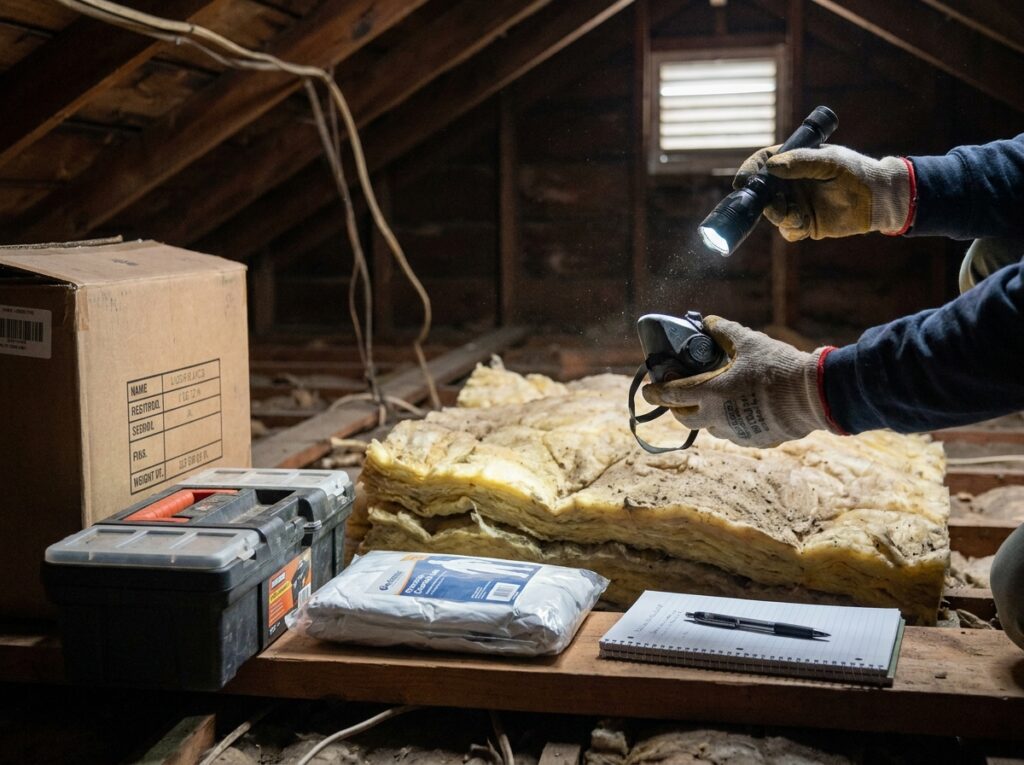
Required Equipment:
- N95 respirator or higher-grade mask (required for mold spore exposure protection)
- Disposable gloves and protective clothing
- High-powered flashlight or headlamp
- Moisture meter ($20-50 at hardware stores)
- Camera or smartphone for documentation
- Optional: Thermal imaging camera for hidden moisture detection
Safety Note: According to EPA guidelines (2024), never disturb suspected asbestos-containing vermiculite insulation without professional testing. Homes built before 1980 may contain asbestos materials.
Timeframe: Initial inspection 30-60 minutes; professional air quality test results take 3-5 business days.
Step 1: Conduct Visual Inspection for Mold Growth Patterns
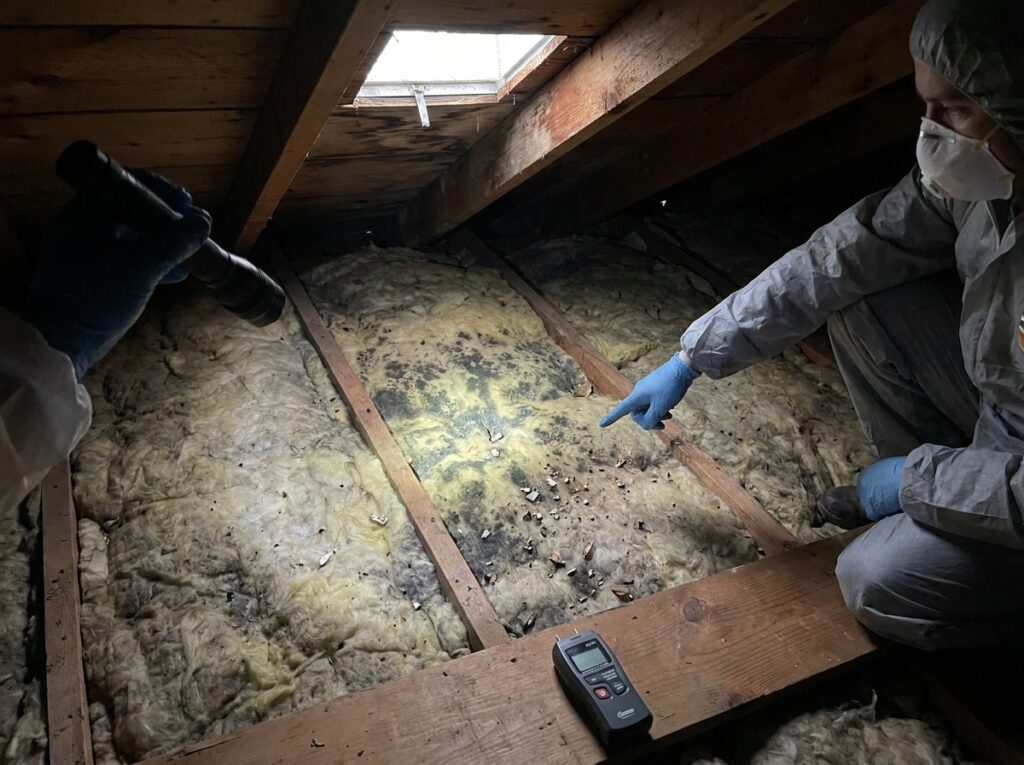
Begin detecting mold in insulation by examining all accessible areas including attic insulation, crawl space, basement, and wall cavity openings. Black mold (Stachybotrys chartarum) appears as dark greenish-black patches on fiberglass insulation, cellulose insulation, or spray foam insulation surfaces.
Look for these signs of water damage in attic insulation:
- Insulation discoloration ranging from yellow to brown or black staining patterns
- Visible mold colony growth on insulation surfaces
- Discolored insulation from water damage near roof leak areas
- Compressed fiberglass or cellulose showing moisture accumulation
- Water stains on insulation indicating active or past condensation buildup
What does moldy insulation look like? Moldy insulation typically shows spotty discoloration, fuzzy growth patches, or widespread darkening. Damaged insulation indicators include deteriorated insulation texture and reduced R-value effectiveness.
Step 2: Check for Musty Odor and Fungal Contamination
Musty smell detection provides critical evidence of mold presence before visible growth appears. What does pest damaged insulation smell like? Contaminated insulation produces distinct odors depending on the source.
Identifying odors:
- Musty odor from old insulation indicates active mold growth or high humidity levels
- Ammonia-like smell suggests rodent urine damage or bat guano accumulation
- Fungal odors intensify near moisture intrusion signs
- Insulation smell that worsens during humid weather confirms environmental conditions supporting mold
According to OSHA safety guidelines (2024), prolonged exposure to moldy insulation causes respiratory issues and allergic reactions in sensitive individuals.
Step 3: Identify Signs of Pest Infestation
Examine insulation thoroughly for rodent infestation symptoms and evidence of insects including termites, carpenter ants, and cockroaches. Signs of pest damage in old insulation compromise both insulation lifespan and home health.
Common pest activity signs include:
- Animal droppings identification: mice produce small rice-sized droppings; rats leave larger, capsule-shaped pest droppings; squirrels create scattered piles
- Urine stains appearing as yellowish discoloration with ammonia odor
- Gnaw marks on wooden beams, wiring, or chewed insulation materials
- Nesting evidence including compressed insulation from pest activity, shredded material, and animal tracks
- Pest entry points visible along roof lines, foundation gaps, or penetrations
- Pest tunnel systems creating pathways through damaged R-value insulation
How to tell if attic insulation has mold versus pest damage: Mold creates surface growth and discoloration, while animal damage to home insulation shows physical disruption, insulation compression, and droppings.
Step 4: Test for Moisture Problems and Water Damage
Use your moisture meter to measure humidity control effectiveness. Readings above 17% in fiberglass insulation or 20% in cellulose insulation indicate moisture damage requiring immediate attention.
Check these critical areas:
- Roof leak damage pathways from shingles to insulation
- Condensation from inadequate ventilation system performance
- Water-damaged insulation near plumbing penetrations
- Signs of moisture problems in crawlspace problems and basement moisture zones
- Vapor barrier integrity and proper installation
Can you see mold on insulation immediately after water exposure? Mold typically appears 24-48 hours after wet insulation conditions develop, according to EPA research (2023).
Step 5: Assess Structural Compromise and Deterioration
Evaluate how contamination levels affect insulation maintenance needs and thermal efficiency loss. Does old insulation need to be replaced? Yes, if showing these damage severity indicators:
- Insulation settling exceeding 25% of original thickness
- Insulation failure reducing energy efficiency by 20% or more
- Structural damage from prolonged moisture intrusion signs
- Insulation decay compromising fire resistance properties
- Home insulation problems affecting HVAC performance
Should I replace 20 year old insulation? Insulation age alone doesn’t necessitate replacement, but combined with contaminated insulation evidence creates clear replacement indicators. When considering when should you replace old attic insulation, evaluate multiple damage factors simultaneously.
Step 6: Document Findings for Professional Evaluation
Proper documentation supports insurance considerations and helps pest control professionals or mold remediation specialists develop accurate remediation process plans.
Document these elements:
- Photograph all damaged areas showing insulation contamination extent
- Record moisture meter readings with dates and locations
- Note symptoms of moldy insulation exposure you’ve experienced
- Identify cost factors by estimating affected square footage
- Map pest scratching sounds and activity patterns if ongoing
Professional insulation mold inspection cost ranges from $200-600, while comprehensive air quality test including spore trap analysis costs $300-800 (2025 national averages).
Step 7: Determine Next Steps and Professional Needs
Based on inspection findings, determine whether DIY insulation mold testing methods suffice or professional intervention is required. Contact specialists when you identify these signs insulation needs removal:
- Mold coverage exceeding 10 square feet (EPA recommendation for professional mold removal)
- Active rodent damage or ongoing pest infestation signs requiring pest control insulation expertise
- Suspected toxic mold varieties needing mold testing and mold identification
- Health risks including ongoing respiratory issues or severe allergic reactions
- Multiple contamination sources requiring coordinated remediation
How often to inspect attic insulation for preventive maintenance? Conduct inspections annually and after major weather events, roof repairs, or plumbing issues.
Troubleshooting Common Issues
If you detect musty odors but see no visible mold: Order professional air quality concerns testing. Mold spore count may be elevated without surface growth, especially in wall insulation issues.
If moisture readings are high but no leak is visible: Check ventilation issues and condensation patterns. Use thermal imaging camera to locate hidden moisture problems.
If you find old rodent droppings but no fresh activity: Inspect for pest exclusion effectiveness. Historical contamination still requires removal procedures and sanitization.
If insulation shows compression but no other damage: Natural insulation settling differs from pest-caused compression. Measure thermal efficiency loss to determine replacement options necessity.
Next Steps and Prevention Strategies
After completing your inspection:
- Schedule professional evaluation within one week for confirmed mold or active pest problems
- Implement humidity control measures maintaining levels below 60%
- Repair identified pest entry points and roof leak damage immediately
- Install or upgrade ventilation system components in affected areas
- Consider insulation replacement for health implications or efficiency concerns
- Establish leak detection monitoring and inspection frequency protocols
- Review how to prevent mold in crawl space insulation and attic conditions
Best way to check old insulation condition combines regular visual inspections, moisture monitoring, and awareness of health symptoms. Early detection of contamination levels prevents extensive structural compromise and reduces removal procedures complexity.
Understanding mold vs pest damage in insulation differences and health risks of old moldy insulation empowers homeowners to maintain safe, efficient homes. When properly assessed, damaged insulation reducing energy efficiency becomes an opportunity for upgraded performance and improved indoor air quality concerns management.