
Closed-cell spray foam insulation is worth the investment for Indiana attics with ice dam problems or air leakage issues, while blown-in insulation (fiberglass or cellulose) is the better fit for budget-conscious homeowners with well-ventilated attics. The right choice depends on your home’s age, how well it’s already air sealed, and whether you prioritize upfront cost or long-term energy efficiency. Below, we break down pricing, R-value performance, payback periods, and decision criteria specific to Indiana’s climate so you can match the right material to your attic.
What You Get: Spray Foam vs Blown-In Insulation Options
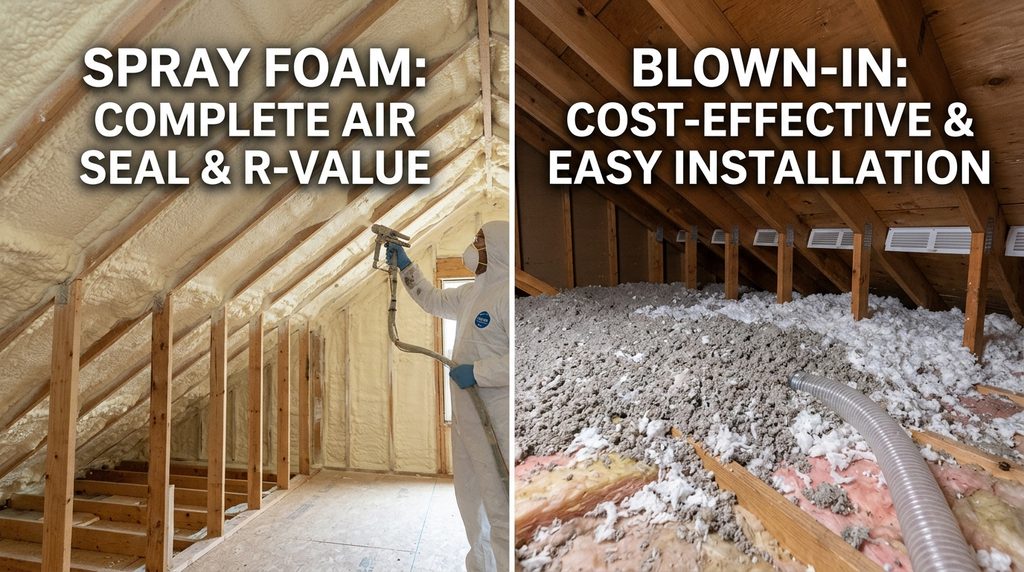
Understanding the different attic insulation types helps clarify which investment fits your needs. Each material differs in R-value per inch, moisture handling, and whether air sealing is included in the installation.
- Open-cell spray foam: R-3.6 per inch, sound dampening, air sealing included, and vapor-permeable. It expands to fill small gaps around wiring and plumbing penetrations.
- Closed-cell spray foam: R-6.5 per inch, acts as a moisture barrier, and adds structural rigidity that can increase racking strength in roof assemblies. It provides superior air sealing, and its denser cell structure resists water intrusion.
- Blown-in fiberglass: R-2.2 to R-2.7 per inch, budget-friendly, and requires separate air sealing. It’s lightweight and settles less over time than older fiberglass products.
- Blown-in cellulose: R-3.2 to R-3.8 per inch, made with recycled content (typically 80–85% recycled paper fiber), and well suited to retrofits. It’s treated with borate for fire and pest resistance.
- Extras not always included: Attic ventilation upgrades, removal of old insulation, vapor barrier installation, roof decking repairs, and baffle installation to maintain soffit airflow.
According to the spray foam vs blown-in insulation comparison guide, polyurethane foam creates an air seal that blown-in materials can’t match without additional air sealing work. This difference matters most in attics with recessed lighting, chimney chases, or multiple roof planes, where air leaks are common.
Indiana Energy Code R-Value Requirements
Most of Indiana falls in climate zone 5 (the southernmost counties are zone 4), where the U.S. Department of Energy recommends attic insulation of R-49 to R-60 for optimal thermal performance. Reaching R-49 typically takes roughly 18–22 inches of blown-in fiberglass, 13–15 inches of cellulose, or about 7.5 inches of closed-cell spray foam. Homes built before 2000 often have only R-19 to R-30 in the attic, leaving significant room for improvement.
Cost Breakdown: Attic Insulation Cost in Indiana (2026)
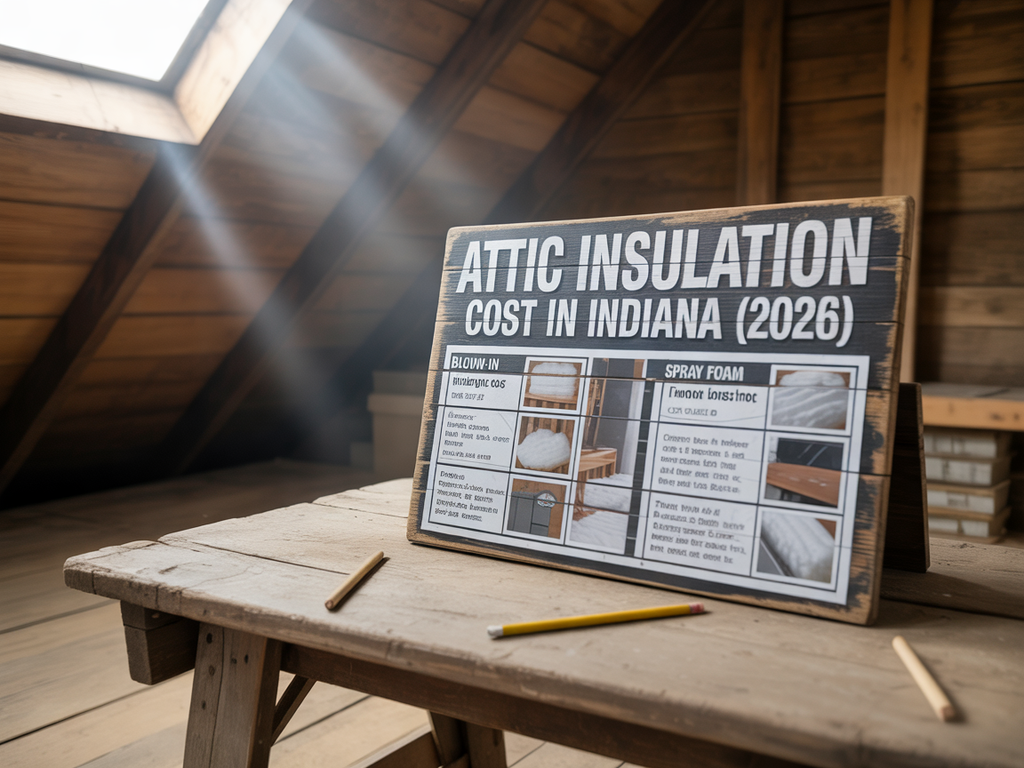
| Insulation Type | Cost per Sq Ft | 1,500 Sq Ft Attic | R-Value per Inch |
|---|---|---|---|
| Open-cell spray foam | $1.50–$2.50 | $2,250–$3,750 | R-3.6 |
| Closed-cell spray foam | $3.00–$5.00 | $4,500–$7,500 | R-6.5 |
| Blown-in fiberglass | $0.80–$1.50 | $1,200–$2,250 | R-2.2–R-2.7 |
| Blown-in cellulose | $1.00–$1.80 | $1,500–$2,700 | R-3.2–R-3.8 |
Spray foam insulation in Indiana costs roughly 2–4x more per square foot than blown-in insulation, based on 2026 regional contractor pricing. Pricing also varies by area: Indianapolis-area contractors typically quote near the midpoint of these ranges, while rural central and southern Indiana markets can run 5–10% lower due to reduced overhead and travel costs.
Additional Cost Factors
- Old insulation removal: An additional $1–$2 per sq ft, often required when existing insulation is contaminated with rodent waste or mold.
- Energy audit: $150–$400 in Indiana to identify priority areas, often including a blower-door test and infrared scan.
- Professional installation labor: Typically 60–70% of total project cost, and higher for spray foam due to equipment setup and certified applicator requirements.
- DIY attic insulation (blown-in only): Saves 30–40%, but requires renting a blower machine (typically $75–$100 per day at home improvement stores).
- Permit and inspection fees: $50–$150 in some Indiana municipalities, though many jurisdictions don’t require a permit for attic insulation.
Expected Benefits & ROI Analysis
Energy-efficient attic upgrades reduce heating and cooling costs, but the payback period varies by material. Calculating return on investment means comparing installed cost against annual utility savings, which depend on your current insulation level, attic air leakage, and local energy rates.
Insulation Payback Period Comparison
- Closed-cell spray foam: 5–8 years, due to air sealing plus high R-value
- Open-cell spray foam: 6–9 years
- Blown-in cellulose: 4–6 years, due to lower upfront cost
- Blown-in fiberglass: 5–7 years
These figures assume a typical Indiana household spending $1,800–$2,400 a year on heating and cooling. Homes starting with little or no attic insulation see faster payback, sometimes 2–3 years, because the first few inches of insulation produce the largest drop in heat loss.
Air sealing combined with added attic insulation saves homeowners an average of about 15% on heating and cooling costs, according to ENERGY STAR. Closed-cell spray foam can push savings higher, toward 25%, because it closes air gaps that blown-in insulation alone can’t address. Pairing blown-in material with separate air sealing (caulking, foam gaskets, and weatherstripping on attic hatches) closes much of this gap, though rarely to the same degree as a continuous spray foam layer.
Moisture Control and Ice Dam Prevention
Closed-cell spray foam acts as an effective attic moisture barrier, reducing mold risk during humid Indiana summers. Its closed-cell structure resists water absorption even if minor roof leaks occur, whereas blown-in fiberglass and cellulose can lose R-value and promote mold growth when saturated.
Unlike blown-in insulation, spray foam directly addresses ice dam formation by sealing attic bypasses where warm air escapes to the roof deck. Ice dams form when escaping heat melts snow on the roof, which then refreezes at the colder eaves. Sealing these air leaks keeps the entire roof deck at a more uniform, cold temperature during winter storms.
Indiana’s climate brings both winter heat loss and summer cooling loads, so air sealing is critical no matter which material you choose. Summer attic temperatures in Indiana can reach 140°F, and a properly sealed, well-insulated attic reduces heat transfer into the living space below, easing the load on your air conditioner during peak months.
Who Should Invest in Spray Foam vs Blown-In Insulation
Spray Foam Insulation Is Worth It For:
- Homeowners with a history of ice dams or visible icicles along the eaves each winter
- Attics with complex rooflines or hard-to-reach cavities where loose-fill material can’t be evenly distributed
- Older homes where traditional air sealing methods fall short, especially balloon-framed houses with open wall cavities connecting to the attic
- New construction projects prioritizing long-term energy efficiency, where the owner is willing to pay a premium during the build
- Homeowners who want a built-in vapor barrier without a separate installation step, simplifying the overall building envelope
Blown-In Insulation Is Worth It For:
- Budget-conscious homeowners who need an attic insulation upgrade without a major upfront cost
- Existing homes with functional attic ventilation and no moisture issues, where the attic already performs reasonably well
- Existing homes that need a top-up, since blown-in insulation can be added directly over older fiberglass batts
- Projects where DIY installation is realistic, particularly for handy homeowners comfortable renting a blower machine for a weekend
Who Shouldn’t Invest in Either Option Yet
Homeowners who haven’t addressed basic air sealing should schedule an energy audit first, since adding insulation over leaky ductwork or uninsulated attic hatches wastes money regardless of material. Anyone with active roof leaks, inadequate attic ventilation, or knob-and-tube wiring should also fix those issues before installing new insulation. Spray foam can trap moisture against failing roof decking, and both materials can be damaged by active water intrusion.
Alternatives to Consider
Recycled Denim Insulation
Recycled denim insulation offers R-3.5 per inch with eco-friendly appeal, though it costs 20–30% more than traditional fiberglass and is less common among Indiana insulation contractors. It’s made from post-industrial cotton scraps, treated with boric acid for fire resistance, and installed as batts rather than blown in, making it a niche option for homeowners who prioritize sustainable materials.
Hybrid Approach: Combining Methods
Many insulation professionals recommend a hybrid system: closed-cell spray foam at roof deck connections, rafter-to-wall joints, and other air leakage points, combined with blown-in fiberglass or cellulose over the open attic floor. This approach keeps costs in check while maximizing air sealing where it matters most. A typical hybrid project might apply 2 inches of closed-cell foam (roughly R-13) along the perimeter and roof-wall intersections, then top the open floor with blown-in cellulose to reach R-49 at a lower blended cost than full-depth spray foam.
Fiberglass Batts as Budget Alternative
Traditional fiberglass batts cost less than blown-in options but perform poorly in irregular attic spaces, making them a weaker choice than loose-fill insulation. Batts must be cut carefully around obstructions, and any gaps or compression around joists reduce their effective R-value, which is why most Indiana insulation contractors recommend blown-in material for attic floors instead.
Building Code and Installation Considerations
Any insulation contractor working in Indiana must follow the Indiana Residential Code’s attic ventilation requirements, which call for adequate airflow between the insulation and roof deck to prevent moisture buildup. This typically means maintaining at least a 1-inch air space at the roof deck using baffles, especially when insulation depth approaches or exceeds rafter height.
Closed-cell spray foam typically requires professional installation due to specialized equipment and safety protocols during curing, often including vacating the home for about 24 hours while off-gassing completes.
Blown-in insulation is more DIY-friendly, though achieving uniform thickness takes practice. Contractors use calibrated blowing equipment and place depth markers throughout the attic to confirm the installed R-value meets code, a step DIY installers shouldn’t skip.
Final Verdict: Which Attic Insulation Is Best for Indiana Homes?
Closed-cell spray foam delivers superior performance for Indiana attics with ice dam history, moisture concerns, or complex air sealing needs, and its built-in air seal can justify the higher upfront cost through greater long-term energy savings.
Blown-in insulation (fiberglass or cellulose) remains the practical choice for straightforward attic upgrades where budget matters more than marginal performance gains.
Before deciding, request quotes from a qualified insulation contractor and compare R-value per dollar, whether air sealing is included, and the projected payback period. At minimum, confirm these four things before signing a contract: your current attic R-value, any active leaks or moisture, ventilation adequacy, and whether the quote includes air sealing or only material installation. These details determine whether spray foam’s premium is worth it over blown-in alternatives.