
Radiant barrier insulation is a reflective foil insulation system designed to reduce radiant heat transfer by reflecting infrared radiation away from living spaces. Unlike traditional bulk insulation that slows conductive heat transfer, radiant barriers work by blocking up to 97% of radiant heat through highly reflective aluminum foil surfaces with low emissivity values (typically 0.03 to 0.05).
For Indiana homeowners, understanding radiant barrier insulation effectiveness requires evaluating both summer cooling efficiency and winter heating performance in the Midwest region’s variable climate conditions. According to the Department of Energy (as of 2025), radiant barriers primarily benefit homes in hot climates, but specific applications in Indiana attics can reduce cooling costs by 5-10% during summer months.
Key Characteristics of Radiant Barrier Technology
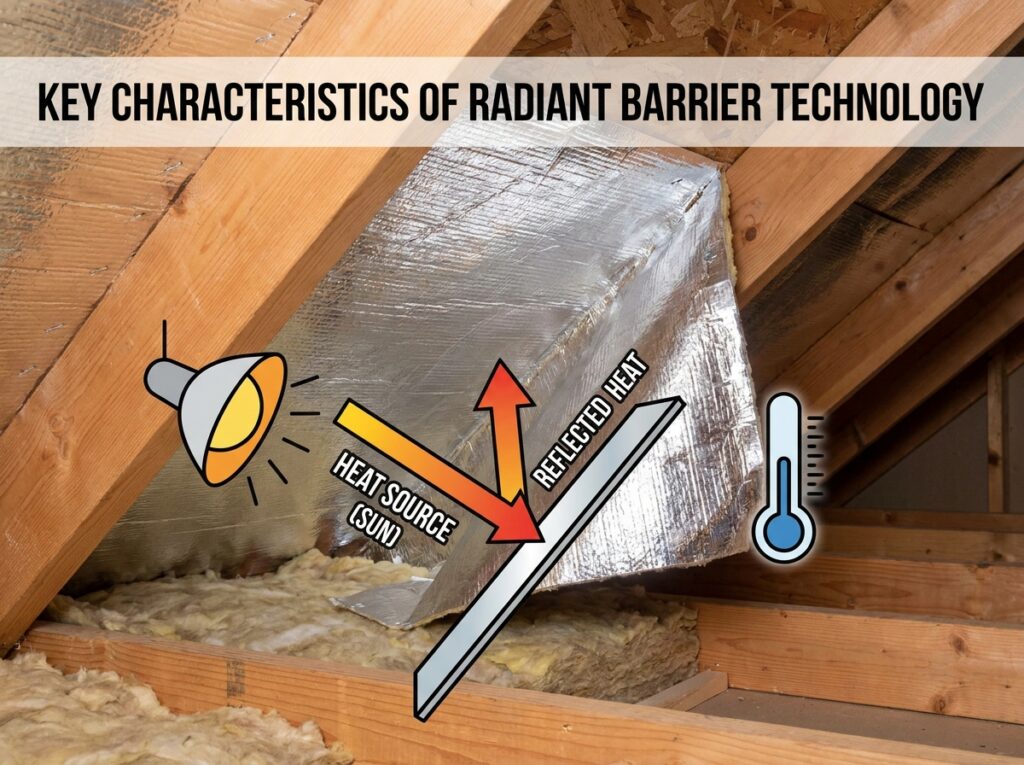
Radiant barrier systems exhibit distinct thermal performance properties that differentiate them from conventional thermal insulation materials:
- Reflectivity ratings: Quality radiant barriers reflect 95-97% of infrared radiation, preventing solar gain transmission through the roof deck
- Low emissivity values: Surface emissivity below 0.05 minimizes heat radiation absorption and re-emission into attic spaces
- Material composition: Aluminum reflective barrier surfaces laminated to kraft paper, plastic films, or oriented strand board for structural integrity
- Air gap requirements: Effective heat reflection technology requires minimum 0.75-inch air space adjacent to reflective surface for optimal infrared heat blocking
- Vapor permeability: Perforated foil barrier options allow moisture control while maintaining reflective properties for breathable radiant barrier performance
How Radiant Barrier Insulation Works
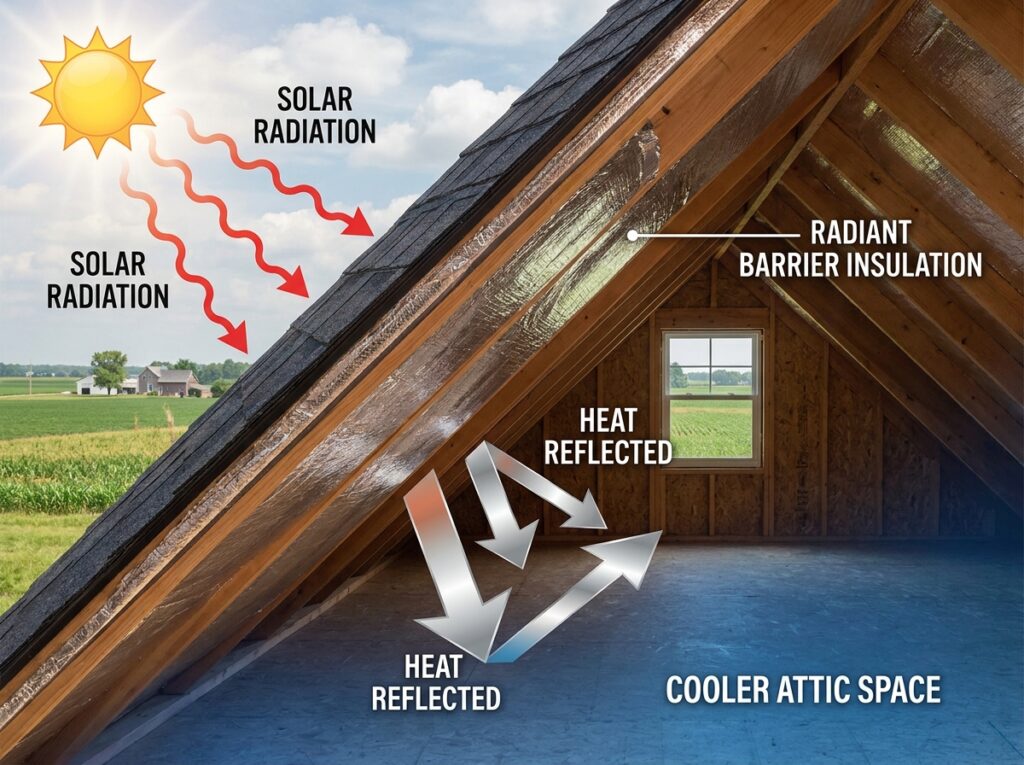
Understanding heat transfer reduction mechanisms clarifies radiant barrier performance in residential insulation applications. Heat moves through three distinct methods:
- Conduction: Direct contact heat transfer through solid materials (addressed by fiberglass insulation, cellulose insulation, and spray foam insulation)
- Convection: Heat movement through air currents (managed by proper attic ventilation systems and building envelope sealing)
- Radiation: Infrared energy transfer without physical contact (blocked by reflective insulation surfaces)
Radiant barriers specifically target radiation heat transfer. When summer heat strikes a roof surface, roof temperature can exceed 150°F. This thermal energy radiates downward toward the attic floor. A properly installed radiant heat barrier reflects this infrared radiation back toward the roof deck, reducing attic temperature by 20-30°F and decreasing heat gain into conditioned spaces below.
The reflective surface technology requires an air space to function effectively. Without adequate ventilation, reflected heat cannot dissipate, reducing thermal barrier systems performance by 40-50%.
Common Misconceptions: Myth vs. Reality
Myth: Radiant barrier insulation has an R-value comparable to traditional insulation.
Reality: Radiant barriers do not have R-value ratings. R-value measures resistance to conductive heat transfer, while radiant barriers address radiative transfer. The Department of Energy confirms radiant barriers complement but do not replace bulk insulation for comprehensive thermal envelope optimization.
Myth: Radiant barriers work equally well in all climate zones.
Reality: Radiant heat reduction methods deliver maximum benefits in hot climates with significant cooling loads. Indiana’s climate zone (5A) experiences moderate summers, limiting cooling cost reduction potential compared to southern states.
Myth: Radiant barriers eliminate the need for traditional attic insulation.
Reality: Effective thermal protection requires hybrid insulation systems. Combining radiant barrier with existing fiberglass or cellulose provides complementary insulation benefits—radiation blocking plus conductive heat loss prevention.
Myth: All radiant barriers perform identically.
Reality: Material quality, installation methods, and dust accumulation significantly affect long-term performance. Professional radiant barrier installation ensures proper air gap maintenance and surface orientation for sustained energy performance rating.
Radiant Barrier vs. Traditional Insulation in Indiana
| Feature | Radiant Barrier | Fiberglass Insulation | Spray Foam Insulation |
|---|---|---|---|
| Primary Function | Reflects radiant heat | Slows conductive transfer | Blocks air infiltration + conduction |
| R-Value per Inch | Not applicable | R-2.2 to R-4.3 | R-3.5 to R-6.5 |
| Installation Cost (Indiana, 2025) | $0.40-$0.75/sq ft | $0.50-$1.50/sq ft | $1.50-$3.00/sq ft |
| Best Season | Summer (cooling) | Year-round | Year-round |
| Indiana Effectiveness | Moderate | High | Very High |
For comprehensive energy efficient homes in Indiana, combining spray foam with radiant barriers addresses multiple heat transfer pathways. Traditional mass insulation handles winter heating performance requirements, while radiant barriers supplement summer heat reduction.
Is Radiant Barrier Worth It in Indiana?
Indiana’s climate presents unique considerations for radiant barrier insulation cost-benefit analysis. The state experiences:
- Moderate summer temperatures (average high 85°F in July)
- Significant winter heating loads (average low 20°F in January)
- Higher heating degree days than cooling degree days annually
Radiant barrier benefits for Indiana homes appear during summer months when attic heat reduction lowers HVAC system demand. According to energy audit recommendations conducted across the Midwest region, Indiana homeowners typically save $75-$150 annually on cooling costs with proper radiant barrier installation.
However, winter conditions limit radiant barrier effectiveness. Heat loss prevention during Indiana winters requires adequate R-value in attic floors (R-49 to R-60 per building codes). Radiant barriers contribute minimal winter heating performance improvement since heating system heat rises primarily through conduction, not radiation.
Cost-Effectiveness Analysis for Indiana
Professional installation of radiant barrier insulation Indiana costs approximately $0.40-$0.75 per square foot as of 2025. For a typical 1,500-square-foot attic:
- Installation cost Indiana: $600-$1,125
- Annual energy savings Indiana: $75-$150 (primarily summer cooling)
- Payback period Indiana: 7-15 years
- Return on investment: Marginal compared to upgrading traditional insulation R-value
Energy Star guidelines suggest prioritizing insulation upgrade options that address Indiana’s primary thermal challenge—heat loss during winter conditions. Increasing attic floor bulk insulation from R-30 to R-49 delivers better energy bill reduction and shorter payback periods than standalone radiant barrier installation.
Practical Applications and Installation Best Practices
When radiant barrier makes sense for Indiana homes:
- New construction: Incorporating reflective sheathing during roof installation adds minimal incremental cost
- Supplemental insulation: Existing homes with adequate R-value can add radiant barriers for marginal summer performance gains
- Dark-colored roofs: Homes with heat-absorbing roof materials benefit most from attic heat shield technology
- HVAC in attic: Reducing attic temperatures improves ductwork efficiency and HVAC efficiency improvement
Installation Tips and Tricks
Proper installation ensures long-term thermal performance:
- Orientation: Install with reflective surface facing air gap (downward for attic floor installation, toward attic for roof deck application)
- Air space maintenance: Secure material to preserve minimum 0.75-inch gap; compressed barriers lose 90% effectiveness
- Seam treatment: Overlap seams 2 inches minimum; tape with aluminum foil tape for continuity
- Ventilation preservation: Never block soffit vents or ridge vents; moisture barrier properties require breathable systems
- Dust prevention: Top-facing surfaces accumulate dust, reducing reflectivity 20-30% over time; bottom-facing installations maintain performance longer
Common Radiant Barrier Installation Mistakes
Avoid these errors that compromise building thermal efficiency:
- Installing non-perforated barriers in humid climates without vapor barrier considerations
- Eliminating air gap by pressing material against surfaces
- Covering attic floor insulation (creates moisture traps and reduces existing R-value effectiveness)
- DIY radiant barrier installation Indiana without understanding building science principles
Contractor Selection and Professional Installation
Qualified radiant barrier insulation contractors in Indiana should demonstrate:
- Knowledge of Indiana climate zone 5A building insulation standards
- Experience with insulation material comparison and hybrid insulation systems design
- Proper licensing for home insulation solutions installation
- Understanding of sustainable building materials and green building practices
- Warranty coverage for radiant barrier insulation durability (typically 10-25 years)
Request multiple quotes comparing radiant barrier installation costs with alternative investments in energy conservation measures like air sealing, traditional insulation upgrades, or passive cooling strategies that may deliver superior home comfort improvement for Indiana’s specific thermal comfort zones.